
Peptides vs Steroids:
What’s actually the difference?
Two words that get lumped together constantly. They are not the same thing. Here’s a clear breakdown of what separates them, why it matters, and why more researchers are choosing peptides.
If you’ve spent any time in fitness, biohacking, or performance research circles, you’ve heard both terms. Peptides and steroids are often mentioned in the same breath — sometimes by people who think they’re essentially the same thing, and sometimes by people who use both without fully understanding the distinction.
They are fundamentally different compounds with different mechanisms, different risk profiles, and very different research histories. Understanding the difference matters if you’re making informed decisions about what you research or put in your body.
What are steroids?
The word “steroid” refers to a broad class of organic compounds defined by their chemical structure — specifically, a four-ring carbon skeleton. This includes both anabolic-androgenic steroids (AAS) like testosterone and nandrolone, and corticosteroids like cortisol and prednisone.
When most people say “steroids” in a fitness or performance context, they mean anabolic-androgenic steroids. These are synthetic derivatives of testosterone, engineered to amplify the muscle-building (anabolic) effects of the hormone while attempting to reduce the masculinising (androgenic) side effects.
Steroids work by entering cells and binding to intracellular receptors — they physically go inside the cell and interact with the cell’s DNA to alter gene expression. This is a slow but powerful mechanism that produces significant and lasting changes in the body’s hormonal environment.
Anabolic steroids work by altering gene expression at the DNA level. The effects are powerful, systemic, and not easily reversible once the hormonal axis is disrupted.
What are peptides?
Peptides are short chains of amino acids — the same building blocks that make proteins. They are not steroids. They do not share the four-ring carbon structure. They are not synthetic hormones. Most peptides studied in research are either identical or structurally similar to compounds the body already produces naturally.
Peptides work by binding to receptors on the surface of cells — they don’t enter the cell or directly alter DNA. Instead they trigger signalling cascades that tell the cell to do something: release more growth hormone, accelerate tissue repair, reduce inflammation, increase melanin production. The effect is targeted and the compound itself breaks down into amino acids after use.
This is a fundamentally different mechanism from steroids and it produces a fundamentally different risk and effect profile.
The key differences
The risk comparison
This is where the distinction becomes most significant in research and practical terms. Anabolic steroids carry a well-documented set of risks that are directly tied to their mechanism of action.
Anabolic steroid concerns
- HPTA suppression requiring post-cycle therapy
- Cardiovascular strain — LDL increase, HDL reduction
- Liver toxicity, particularly oral 17-alpha alkylated compounds
- Androgenic effects — hair loss, acne, virilisation in women
- Hormonal disruption that can persist long after use
- Psychological effects including aggression and mood instability
Research peptide profile
- No HPTA suppression in most studied compounds
- No known liver toxicity in animal models
- Broken down into amino acids — no accumulation
- No androgenic activity in healing and metabolic peptides
- Effects are targeted rather than systemic hormonal shifts
- Generally well tolerated in animal studies
It’s important to note that research peptides are not without risks or unknowns — long-term human data is limited for many compounds, and individual responses vary. But the risk profile is structurally different from anabolic steroids, which is why they attract different researchers and different use cases.
Why researchers are moving toward peptides
The past decade has seen a significant shift in performance and longevity research away from anabolic steroids and toward peptides. Several factors are driving this:
- Specificity — peptides can be designed to target very specific receptors and pathways, rather than flooding the body with androgenic hormones
- GLP-1 success — the clinical success of semaglutide, tirzepatide, and retatrutide has demonstrated that peptides can produce dramatic body composition changes with a very different risk profile than steroids
- Recovery research — compounds like BPC-157 and TB-500 are studied for tissue repair applications where steroids have no comparable mechanism
- Longevity focus — peptides like GHK-Cu, Epithalon, and MOTS-C address aging biology in ways that have no steroid equivalent
- Reversibility — researchers studying compounds that don’t permanently alter hormonal axes have more flexibility in their protocols
The bottom line: not the same thing
Peptides and steroids are different classes of compounds with different mechanisms, different applications, and different risk profiles. Grouping them together reflects a misunderstanding of basic biochemistry. The research community has been making this distinction for decades. The broader public is catching up.
Research peptides available in Bangkok
Bangkok Peptide Center supplies third-party tested research peptides with same-day delivery in Bangkok. Our range includes healing peptides, metabolic peptides, anti-aging compounds, and longevity research compounds — all at 99%+ purity with Certificate of Analysis available on request.
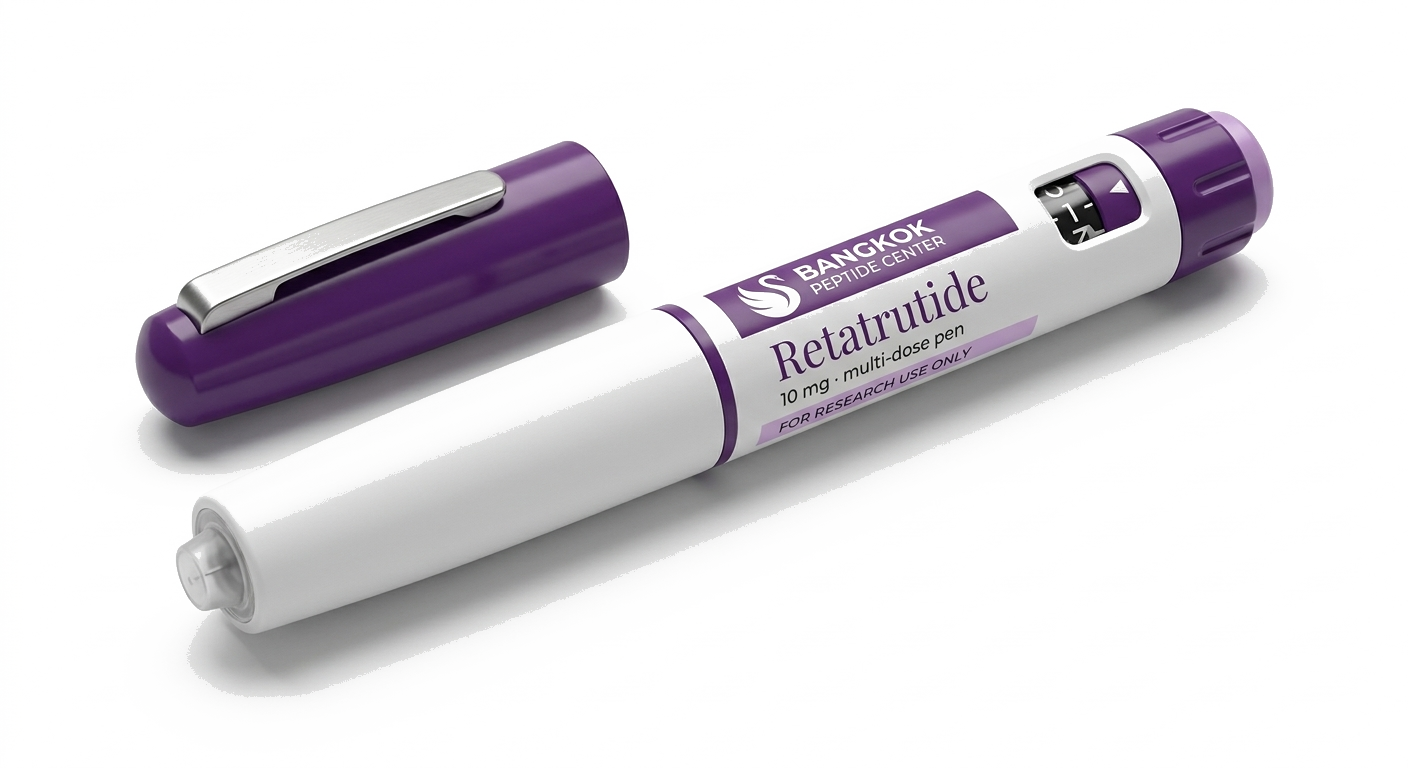
- Retatrutide 10mg — triple GLP-1/GIP/Glucagon agonist
- BPC-157 10mg — healing and tissue repair
- TB-500 10mg — systemic recovery and anti-inflammatory
- GHK-Cu 50mg — collagen, skin, and anti-aging
- Tirzepatide 10mg — dual GIP/GLP-1 agonist
- Epithalon 10mg — telomere and longevity research
- NAD+ 500mg — cellular energy and sirtuin activation
- Glutathione 1500mg — master antioxidant
Browse our full range
Same-day delivery in Bangkok. 99%+ purity. Bacteriostatic water available separately.
View all peptides →For research and educational purposes only. All products supplied by Bangkok Peptide Center are strictly for laboratory research purposes only. Not intended for human use. Always consult a qualified healthcare professional before considering any research compound.