
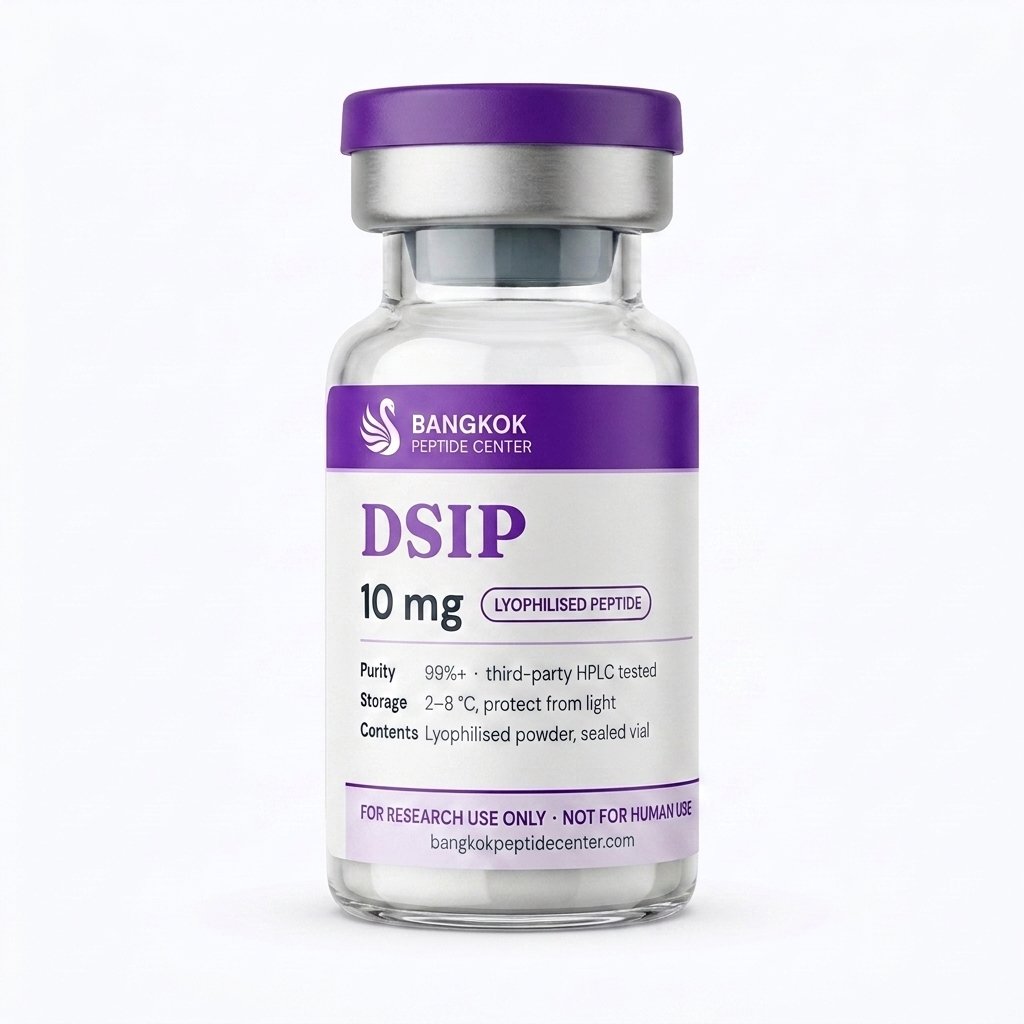
What is DSIP?
DSIP, or Delta Sleep-Inducing Peptide, is a nonapeptide first isolated in 1977 from the cerebral venous blood of rabbits in slow-wave sleep. Its name derives from its original discovery context, where it was observed to promote delta wave activity, the slow brain waves characteristic of deep, restorative sleep. Since then, research has revealed that DSIP has a far broader range of activity than sleep alone, extending into stress response, hormonal regulation, and neuroprotection. It remains one of the more intriguing and less fully understood neuropeptides in current research.
Mechanism of Action
The precise mechanism of DSIP is still being characterised, which is part of what makes it an active area of research. It appears to cross the blood-brain barrier and interact with multiple neuroendocrine systems rather than acting through a single receptor. Research indicates DSIP influences the hypothalamic-pituitary-adrenal axis, modulating cortisol and stress hormone release. It has also been observed to affect the release of somatotropin and luteinizing hormone, and to interact with opioid and serotonergic signalling. This multi-system activity explains its broad range of observed effects across sleep, stress, and hormonal research.
Research Applications
DSIP is studied across several distinct research domains. Sleep research remains the primary focus, particularly slow-wave sleep architecture and sleep onset. Beyond sleep, DSIP is studied for stress response and cortisol regulation, its potential role in pain modulation and analgesia, neuroprotection under oxidative stress, and its effects on the hypothalamic-pituitary axis. Research has also explored DSIP in the context of alcohol and opioid withdrawal, where its neuroendocrine effects may be relevant.
Product Details
Storage
Store lyophilised vials in a cool, dry place away from light. Once reconstituted with bacteriostatic water, refrigerate at 2-8°C and use within 3-4 weeks. See our reconstitution guide for detailed instructions.
รีวิว
ยังไม่มีบทวิจารณ์