
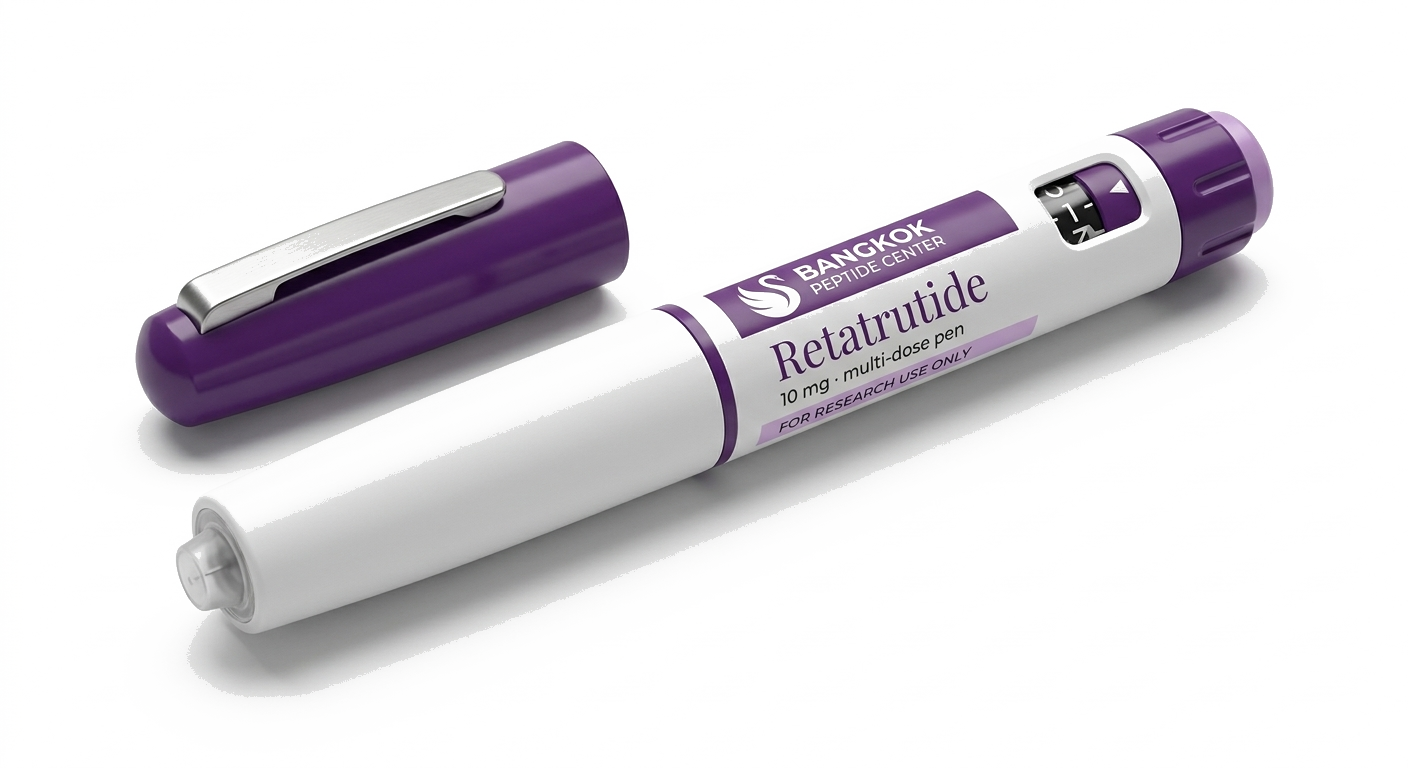
Retatrutide and Tirzepatide are the two most researched GLP-1 receptor agonists in metabolic peptide science right now. Both target incretin pathways. Both have produced significant clinical results. But they work through different mechanisms, and the data behind each tells a distinct story. Here’s how they compare.
What they are
Tirzepatide is a dual agonist that activates two receptors: GLP-1 (glucagon-like peptide-1) and GIP (glucose-dependent insulinotropic polypeptide). Available since 2022 under the brand names Mounjaro and Zepbound, both manufactured by Eli Lilly, it is currently FDA-approved for type 2 diabetes and for weight management in adults with obesity.
In contrast, Retatrutide is a triple agonist. While it activates the same two receptors as Tirzepatide, it also targets a third: the glucagon receptor. This additional mechanism is what separates it from every other compound in its class. Although also developed by Eli Lilly, Retatrutide remains investigational and has not yet received FDA approval. Currently in Phase 3 clinical trials, a head-to-head comparison against Tirzepatide is expected to report results in December 2026.
How the mechanisms differ
At their core, both compounds slow gastric emptying, reduce appetite, and improve insulin sensitivity through GLP-1 and GIP receptor activation. As a result, there is significant overlap in their effects.
However, the key difference is glucagon. Retatrutide’s activation of the glucagon receptor adds a metabolic dimension that Tirzepatide does not have. Specifically, glucagon promotes the breakdown of stored fat for energy and increases resting energy expenditure. In practical terms, Tirzepatide primarily reduces how much energy goes in, whereas Retatrutide does that and also increases how much energy goes out.
Consequently, this dual approach — less in, more out — is a key reason researchers have shown particular interest in Retatrutide’s body composition effects beyond simple weight reduction.
What the clinical data shows
On the Tirzepatide side, the landmark SURMOUNT-1 trial showed an average body weight reduction of approximately 21% over 72 weeks at the highest dose. Furthermore, the more recent SURMOUNT-5 trial demonstrated 20.2% weight reduction at 72 weeks, significantly outperforming semaglutide’s 13.7% in the same study.
Meanwhile, Retatrutide’s Phase 2 data reported approximately 24% average weight loss in just 48 weeks. Moreover, Phase 3 results showed participants on the 12mg dose losing an average of 28% of body weight over 80 weeks.
To put these numbers in perspective, a 2025 network meta-analysis published in the Journal of the Endocrine Society compared the two compounds across 12 clinical trials. According to the analysis, Retatrutide showed greater absolute weight reduction (16.34 kg vs 11.82 kg) and greater percentage weight loss (23.77% vs 16.79%). Nevertheless, adverse events were more frequent with Retatrutide.
Side effect profiles
As with most GLP-1 receptor agonists, both compounds share common GI-related side effects: nausea, diarrhea, vomiting, and decreased appetite. Generally, these tend to be most pronounced during dose escalation and typically diminish over time.
That said, the meta-analysis data indicates Retatrutide may carry a higher frequency of adverse events compared to Tirzepatide. This is largely consistent with what you would expect from a compound activating an additional receptor pathway — in other words, more biological activity means more potential for side effects alongside greater efficacy.
Research beyond weight
In addition to weight management, Tirzepatide is being studied for cardiovascular risk reduction, obstructive sleep apnea, and metabolic dysfunction-associated liver disease (MASLD). Because of its approved status, a broader base of real-world data is available across these applications.
On the other hand, Retatrutide’s early research suggests potential advantages in kidney function preservation in diabetic models and more pronounced effects on body fat composition specifically. Additionally, the glucagon receptor component may offer unique benefits in hepatic fat reduction and metabolic rate that Tirzepatide’s dual mechanism does not address.
Quick comparison
| Retatrutide | Tirzepatide | |
|---|---|---|
| Receptors | GLP-1 + GIP + Glucagon | GLP-1 + GIP |
| Type | Triple agonist | Dual agonist |
| Status | Investigational (Phase 3) | FDA-approved |
| Max weight loss | ~28% at 80 weeks | ~21% at 72 weeks |
| Developer | Eli Lilly | Eli Lilly |
| Unique edge | Increased energy expenditure | Established safety data |
Which one for your research?
Overall, Tirzepatide has a larger body of published clinical data and an established safety profile from years of real-world use. Therefore, for research requiring a well-characterized compound with extensive literature, it remains the more documented option.
In comparison, Retatrutide represents the next generation of incretin-based research. Its triple-agonist mechanism and the emerging data on superior weight reduction make it the compound to watch for researchers exploring the frontier of metabolic peptide science. Most importantly, the glucagon receptor component opens research avenues that dual agonists simply cannot access.
As a result, many researchers now study both compounds in parallel to understand how the addition of glucagon receptor agonism changes outcomes across different metabolic parameters. For recovery and body composition research, compounds like BPC-157, TB-500, and MOTS-C are commonly studied alongside metabolic peptides. For proper handling of all compounds, our reconstitution guide covers everything you need.
Both available at Bangkok Peptide Center
Same-day delivery in Bangkok. 99%+ purity. Bacteriostatic water available separately.
Shop Retatrutide → Shop Tirzepatide →Journal of the Endocrine Society — Comparative Efficacy Meta-Analysis (2025)
Drugs.com — Retatrutide vs Tirzepatide Overview
GoodRx — Retatrutide vs Tirzepatide Comparison
For research and educational purposes only. All products supplied by Bangkok Peptide Center are not approved pharmaceutical products and are not intended for human use. Bangkok Peptide Center supplies research peptides strictly for laboratory research purposes. Always consult a qualified healthcare professional before considering any research compound.