
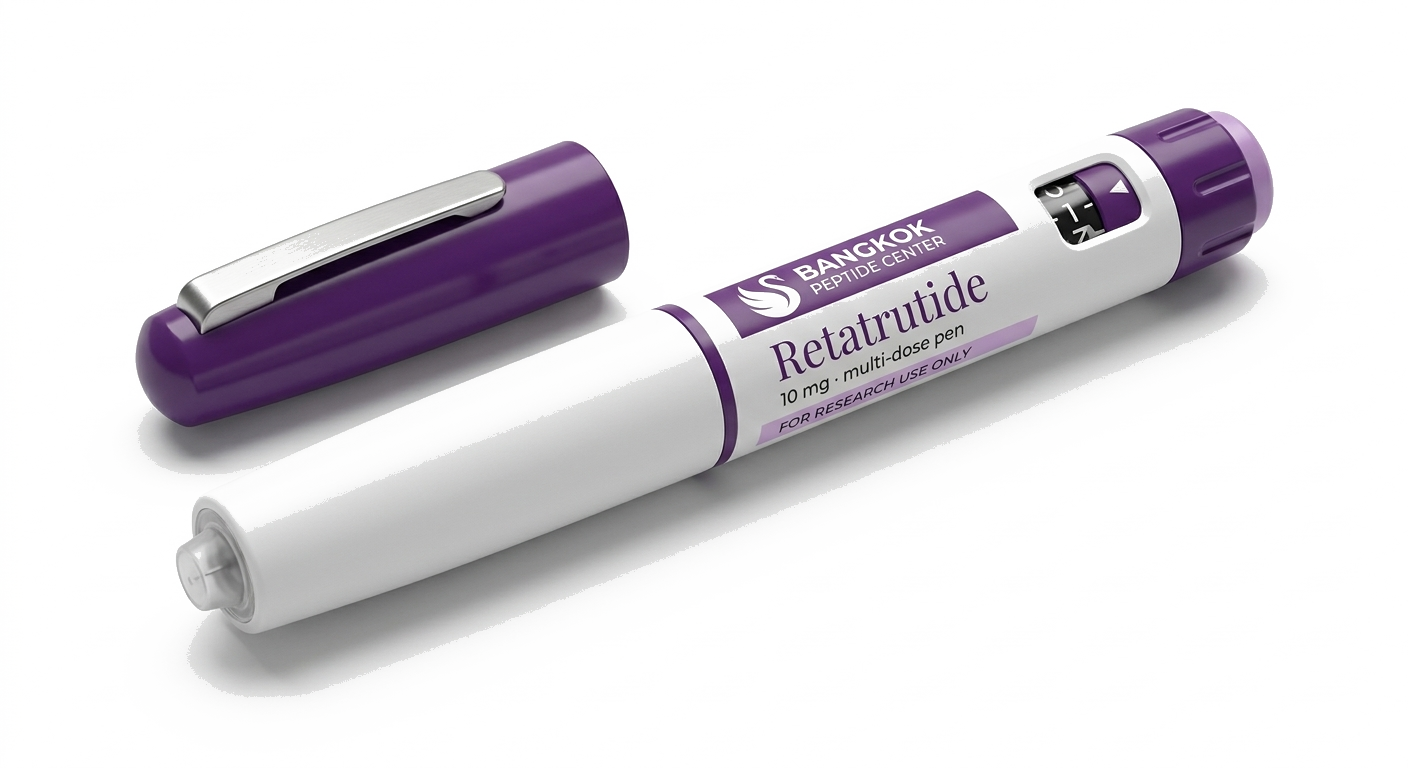
KLOW is one of the most complete research blends available, combining four of the most studied repair and recovery peptides into a single vial. Here’s a breakdown of what’s inside, how each component works, and why researchers are increasingly interested in blended formulations.
What is KLOW?
KLOW is a four-part peptide blend containing GHK-Cu, TB-500, BPC-157, and KPV in a single 80mg lyophilised vial. Specifically, each vial holds 50mg of GHK-Cu, 10mg of TB-500, 10mg of BPC-157, and 10mg of KPV. Rather than reconstituting four separate compounds, researchers get all four in one preparation, which is why blends like this have become popular in recovery and tissue-repair research.
Each component brings a distinct mechanism, and together they cover an unusually broad range of repair pathways: skin remodeling, connective tissue regeneration, and anti-inflammatory signaling.
The four components
GHK-Cu (50mg)
GHK-Cu is the largest component of the blend and the star of the skin-research world. It’s a naturally occurring copper-binding peptide found in human plasma, and notably its levels decline significantly with age. In research, GHK-Cu is studied for stimulating collagen and elastin production, supporting skin remodeling, and acting as an antioxidant. It’s the compound most associated with skin firmness and tissue quality. You can read more in our GHK-Cu product overview.
TB-500 (10mg)
TB-500 is a synthetic fragment of thymosin beta-4, a protein involved in cell regeneration. In research models, it’s studied for promoting actin regulation, cell migration, and tissue repair. Consequently, it’s frequently referenced alongside recovery and regeneration research.
BPC-157 (10mg)
BPC-157 is a stable gastric pentadecapeptide widely studied for its role in soft-tissue and tendon repair, as well as gut health. Furthermore, it’s often researched for its effects on angiogenesis, the formation of new blood vessels that supports healing. It’s one of the most referenced repair peptides in current literature.
KPV (10mg)
KPV is the newest addition to blends like this. It’s the C-terminal tripeptide of alpha-MSH and is studied primarily for anti-inflammatory activity. Because inflammation underlies so many repair processes, adding KPV to a recovery blend gives researchers an anti-inflammatory component alongside the regenerative ones.
Why researchers use blends
The main appeal of a blend like KLOW is convenience and coverage. Instead of sourcing, storing, and reconstituting four separate vials, everything comes in one preparation. Moreover, the four compounds target complementary pathways, so studying them together allows researchers to observe combined effects rather than isolated ones.
That said, blends aren’t right for every research context. When precise per-compound dosing is required, individual vials give more control. However, for general recovery and tissue-repair research, a blend covers more ground in a single administration.
Component overview
| Component | Amount | Primary research focus |
|---|---|---|
| GHK-Cu | 50mg | Skin, collagen, remodeling |
| TB-500 | 10mg | Tissue regeneration, recovery |
| BPC-157 | 10mg | Tendon, gut, soft-tissue repair |
| KPV | 10mg | Anti-inflammatory signaling |
Reconstitution and storage
KLOW ships as a lyophilised powder and is reconstituted with bacteriostatic water, the same as any single-compound vial. Draw the water slowly down the side of the vial rather than directly onto the powder, and swirl gently rather than shaking. Once reconstituted, refrigerate at 2-8°C and use within 3-4 weeks. Our reconstitution guide covers the full process step by step.
KLOW available at Bangkok Peptide Center
Four-part repair blend in one vial. 99%+ purity. Same-day Bangkok delivery.
Shop KLOW →For researchers who prefer individual compounds, we also stock GHK-Cu, TB-500, and BPC-157 separately, along with our full range of research peptides.
All products supplied by Bangkok Peptide Center are intended strictly for laboratory research purposes only. They are not medicines, not approved pharmaceutical products, and are not intended to diagnose, treat, cure, or prevent any disease. Not for human consumption.